
What issues can Play & Creative Arts Therapy help?
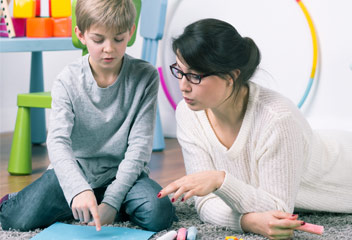
Anxieties, concerns, and stress
Play therapy helps children express anxieties, concerns, and stress through creative activities, promoting emotional well-being.

Diminished self-esteem and self-worth
Empower children with diminished self-esteem using play therapy to boost confidence, self-worth, and positive self-image.
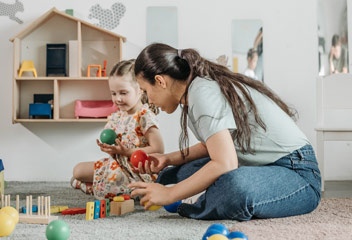
Motivational challenges
Play therapy tackles motivational challenges, inspiring children through a playful environment for enhanced engagement and curiosity.
Low confidence
Build bridges to overcome low confidence in children through play therapy, fostering self-discovery and empowerment.

Excessive activity and struggles with concentration
Play therapy addresses excessive activity and concentration struggles in children, enhancing focus and self-regulation.

Issues related to anger and control
Navigate issues related to anger and control in children with play therapy, promoting emotional regulation.

Experiences of trauma, including abuse or neglect
Play therapy aids children dealing with trauma from abuse or neglect, providing a safe outlet.
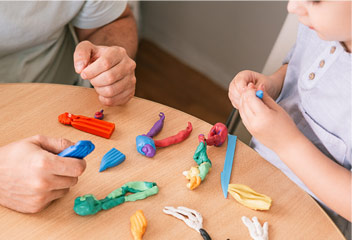
Hospitalised children or those dealing with prolonged health issues
Support hospitalized or chronically ill children using play therapy to alleviate stress and promote well-being.

Grief and coping with loss
Guide children through grief and loss with play therapy, offering a compassionate space for expression.
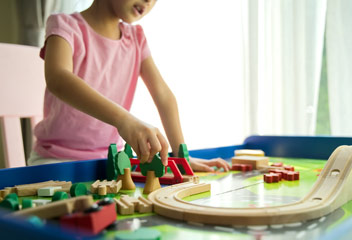
Behavioural and emotional challenges
Play therapy addresses emotional challenges in children, enhancing focus and understanding.

Separated or divorced parents
Assist children of separated or divorced parents with play therapy, fostering emotional resilience and support.
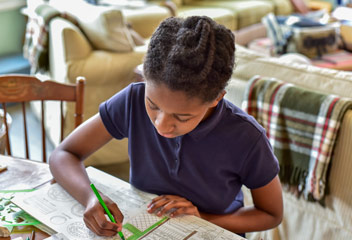
Academic, Social & Cultural Under Performance
Play therapy supports children facing academic, social, and cultural underperformance by boosting confidence and fostering engagement.

Bullying & Social Exclusion
Combat bullying and social exclusion with play therapy, promoting inclusion, empathy, and positive peer relationships.

Attachment & Communication Issues
Address attachment and communication issues in children using play therapy, fostering stronger relationships and communication skills.

Nightmares
Play therapy helps children deal with nightmares, reducing fear through creative expression and emotional support.
Children typically undergo transformations in the following aspects
Enhanced motivation, confidence, self-esteem, and self-worth
Adoption of a more optimistic perspective
A composed demeanor and increased acceptance of those in their vicinity
Heightened awareness and a sense of responsibility
Improved relationships with both family and friends
Individual Play Therapy
Our individual play therapy sessions are tailored to meet the unique needs of each child or individual. In a one-on-one setting, our experienced therapists use play as a therapeutic tool to explore emotions, build coping skills, and promote positive growth. Individual play therapy sessions provide a personalized and focused approach to address specific challenges, fostering a safe space for self-expression and healing.
Group Play Therapy
Group play therapy offers a supportive environment where individuals can connect with peers, share experiences, and learn from one another. Led by our skilled therapists, group sessions incorporate play as a means of enhancing social skills, communication, and emotional regulation. Group play therapy is particularly beneficial for children, promoting a sense of community and fostering interpersonal relationships in a playful and therapeutic setting.
Filial Play Coaching
Our Filial Play Coaching sessions recognise the interconnected dynamics within a family unit. Through a combination of play and guided interactions, our therapists work with families to strengthen communication, resolve conflicts, and build stronger connections. Filial Play Coaching is a collaborative and inclusive approach that engages family members in the therapeutic process, creating a space for understanding, healing, and improved family dynamics.
It is suitable for caregivers of children aged 18 months to 18 years with mild emotional or behavioural problems. The aim is to support the caregiver to build a relationship through play which positively influences the fundamental cause of problems.
The caregiver keeps a log of their sessions and is offered support and guidance by the filial mentor. As it is non-directive approach, the child takes the lead and the caregiver offers acceptance rather than correction. The child is only corrected when boundaries are broken. Each referral will be different but will be roughly 12 weekly sessions of 50-60 minutes. Some of the sessions will require the child attending, as the filial mentor will observe a 20 minute play session with the caregiver and child.
What can caregivers expect by engaging in Filial mentoring?
- Follow-up telephone mentoring and support is available during (and for a short time after) the course.
- Talking through feelings about your child, yourself, and other family members (but not in a personal therapy capacity).
- Focusing on the future-what the child is capable of being, not what s/he has done in the past.
- Experientially based - learning by doing.
- Practising new skills to change behaviour.
What is required from the caregiver?
- Set aside 10 minutes five days a week for play time
- Create a 'box' of art materials and toys for use specifically during these interactive sessions with your child. Phone mentoring and support is available during (and for a short time after) the course.
The primary goal is to foster a positive relationship that addresses the root causes of challenges. This may involve:
- Shifting perspectives on the parent/carer-child relationship.
- Enhancing active listening skills.
- Cultivating the ability to see situations from the child's perspective.
- Boosting parental confidence in responding to their child.
- Improving self-perception.
- Developing a deeper understanding of the parent-child relationship.
- Facilitating the child's development of internal control.
- Introducing a unique set of play materials to encourage the expression of the child's emotions, needs, and experiences.
- Strengthening emotional literacy.
These acquired skills can be shared with other family members, providing valuable tools to navigate the complexities of family life. If you are interested in exploring filial mentoring to support both you and your child, please feel free to reach out to me.